This is part of the playbook that equates to thousands in cost savings, reducing flight training costs by 30% to 80%. To help you understand, we built an interactive calculator.
While the calculator uses Private Pilot Training as an example, the lesson applies to anyone who is pursuing a new pilot certificate, rating, or endorsement.
You can interact with it here. Scroll to the bottom of the page and adjust the levers to see how training cost and timeline change.
If you played with the calculator, you know 2 things:
1. You can be in control (just like you moved the levers to change training frequency and efficiency in our interactive calculator).
2. Your enemy is waste, not price per hour.
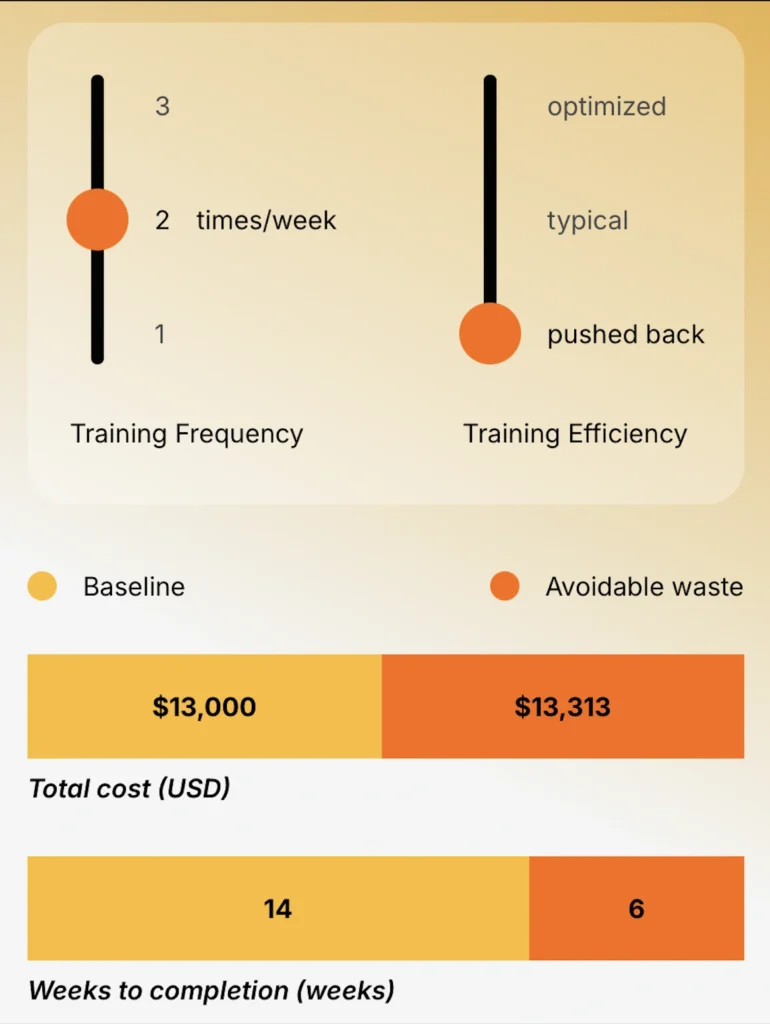
To protect your progression and your investment, own the 2 levers to reduce cost and timeline to become a capable and proficient pilot:
Training frequency
Why it matters: Gaps weaken connections between lessons. That makes progress slower.
Tip: Lock in the cadence. Book sessions upfront and commit.
How often do you need to train: The right cadence keeps you moving forward, so each lesson builds on the last and follow-through stay doable.
Training efficiency
Why it matters: Inefficiency is training debt. You repay it with extra hours, or carry it forward as skill gaps.
Tip: Use a personal system so each lesson stacks into skill, not debt.
How to exercise control: Learn how to Win The Flight Training Game. Exploit the power of compounding, and put in the reps until you shave off waste and hit personal bests.
We have lectures to help you figure out the optimal process to your “win” with no regrets:
The Flight Training Process Explained
Your Flight Training Multipliers
Calculator Assumptions
The calculator models the path from zero experience to being ready to take the Private Pilot Checkride. It assumes the required knowledge exam is completed by the time of the Checkride and it excludes study time.
Avoidable waste applies only above the baseline.
How we set the baseline:
Baseline inputs are averaged from students who reached checkride-ready proficiency across diverse ages, nationalities, and backgrounds, in low-waste environments, including:
(1) no excessive ground delays
(2) practice areas near the airport (minimal transit time)
(3) consistent scheduling and training plan
(4) continuous training loops
Baseline used:
PPL hours: 43 hrs
PPL cost: $13,000 USD (excludes checkride fee)
The Hidden Problem No One Talks About
Ask new pilots how long it’s taking them to solo, and you’ll often hear a number that should make you pause: 70 to 80 flight hours.
Even more striking is when operations brag about their students soloing at 30 to 40 hours — because it’s half the national average.
Ask how many hours it can take to obtain a pilot certificate, not just to solo. The FAA minimum? 30 to 40 flight hours for a Private Pilot Certificate. That’s double the time, money, and energy just to solo.
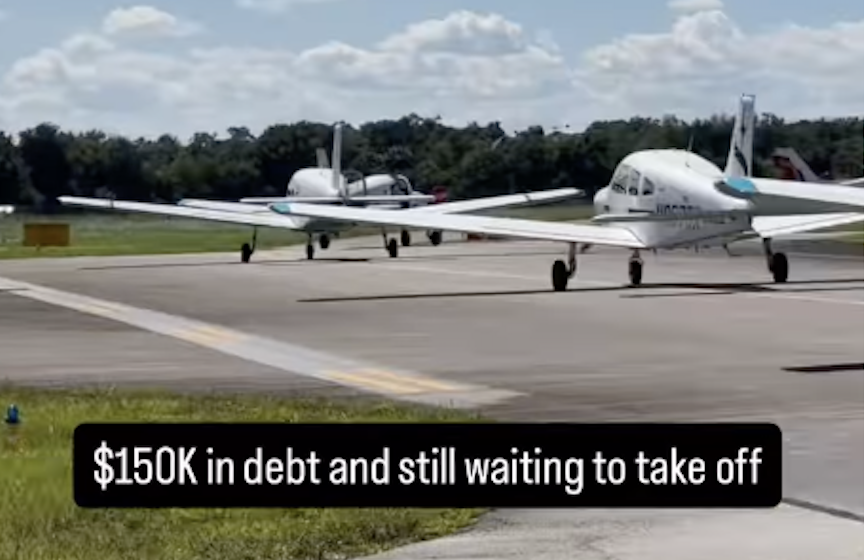
So how did wasting thousands of dollars become “normal”?
It didn’t happen overnight. It happened quietly — one inefficient lesson at a time.
Students repeat lessons, switch instructors, and burn through their flight training budgets — all without realizing they’re trapped in a broken process.
What began as an exception has become the standard — a phenomenon known in safety culture as “normalization of deviance.”
It happens when small deviations from ideal performance become so common that they start to feel normal. And in flight training, it’s everywhere:
- Instructors delaying solos when students are clearly ready
- Students accepting “that’s the way it is” as a routine answer
- Lessons without clear goals — improvising on the go
Every time a student accepts a lesson that’s not quite what they expected, the deviation grows. And when you depend entirely on sign-offs to move forward, it’s easy to feel like your progress is out of your control.
The consequences don’t show up right away — they appear later, as students burn through savings, lose confidence, or quit. What’s actually happening is compounding inefficiency — the silent killer of both progress and motivation.
“It doesn’t have to be this way.”
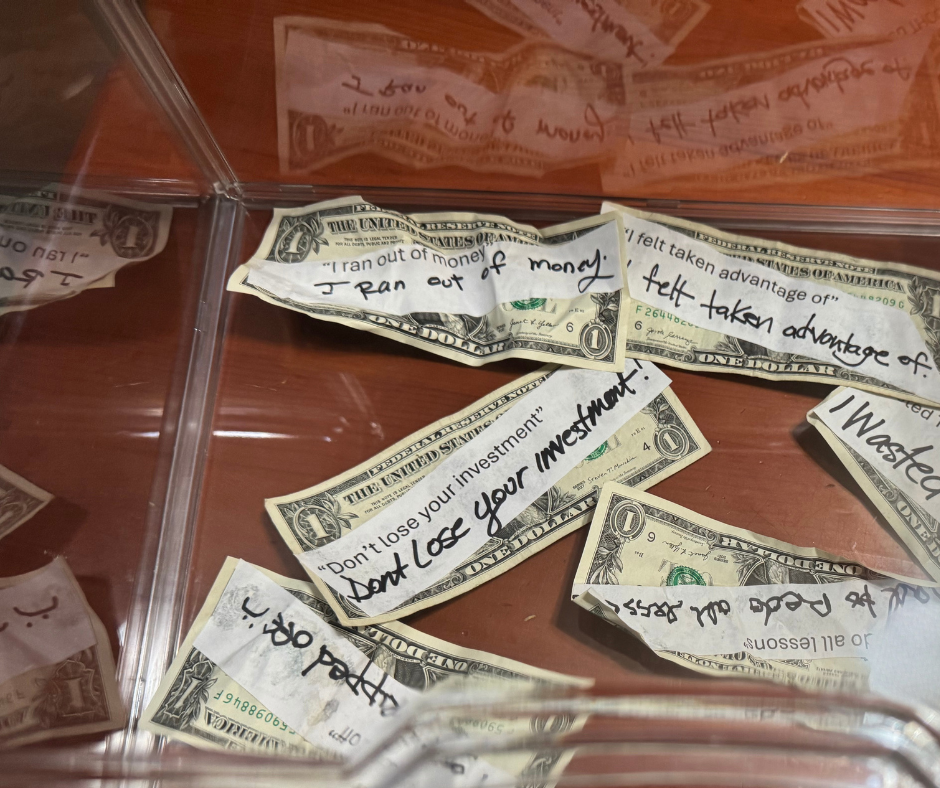
Don’t Let Anyone Hold You Back
Flight training is expensive, time-consuming, and emotionally demanding. Don’t let an outdated system decide for you.
True progress in aviation isn’t about racking up hours — it’s about building confidence rooted in your capabilities.
Whether you’re a student pilot, instructor, or flight school, you have a choice: continue accepting inefficiency as normal or optimize your training to turn it into proficiency and confidence building.
Take ownership of your training, your standards, and your aspirations.